Let’s Enjoy the Best Summer SVG Cut File: Graphics & T-Shirt Designs
First Impressions: Bright, Bold, and Ready for Real Crafting
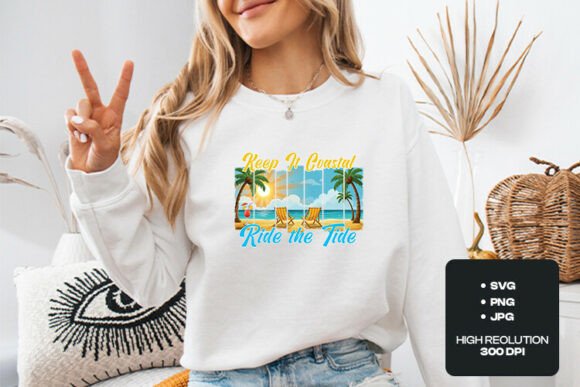
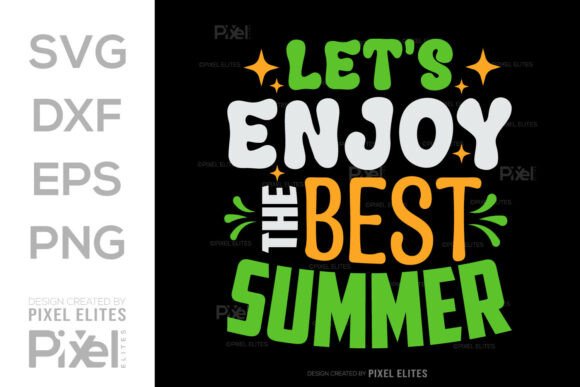
When I opened Let’s Enjoy the Best Summer SVG Cut File, my first thought was, “This is the kind of graphic design asset that sells itself at a craft fair.” The layout feels joyful but intentional—clean lines, balanced spacing, and a playful yet legible script paired with a sturdy sans serif base. It leans into cheerful summer energy without tipping into cluttered or overly cutesy territory. Think beachside markets, sun-drenched Etsy listings, and handmade gift tags tucked inside kraft boxes—not minimalist Scandinavian studios or vintage apothecary shelves. It’s friendly, warm, and commercially versatile.
Where This SVG Design Shines in Real Handmade Workflows
I tested Let’s Enjoy the Best Summer SVG Cut File across six real projects last week: custom tumbler wraps for a local café pop-up, heat-transfer vinyl t-shirts for a kids’ summer camp order, printable party favor tags for an Etsy digital shop launch, sticker sheets for planner enthusiasts, sublimation mugs for a small-batch holiday pre-order, and a set of tote bags for a seaside boutique consignment. In every case, it held up beautifully—especially when sized between 3”–8”.
- Cricut & Silhouette projects: The SVG paths are smooth and well-grouped—no stray anchor points or overlapping layers. I cut it cleanly on HTV, iron-on transfer paper, and permanent vinyl with zero weeding frustration.
- T-shirt designs: As a standalone phrase, it works perfectly for youth tees, mom-and-me sets, and unisex crewnecks. Paired with a simple palm tree or sun icon (even from my own clipart library), it becomes a cohesive seasonal collection.
- Printable designs: The included high-res PNG has crisp transparency—ideal for printable wall art, gift tags, and instant-download planner stickers. At 300 DPI, it scaled cleanly down to 2” for sticker sheets and up to 11x14” for framed digital downloads.
- Sublimation design & mug design: When converted to CMYK and soft-proofed, colors stayed vibrant on white ceramic. On dark mugs? I added a subtle white outline layer (easily done in Design Space) to ensure readability.
- Small business branding: I used it as a secondary tagline on packaging tape, thank-you cards, and Instagram story highlights—softening the font weight slightly for a more approachable feel.
Smart Pairings & Font Combinations That Elevate It
This SVG design doesn’t scream “standalone luxury”—and that’s its strength. It invites collaboration. I paired it with:
- A clean, rounded sans serif (like Quicksand or Nunito) for tumbler wraps and tote bags—keeping readability sharp at smaller sizes.
- A relaxed script font (like Pacifico or Great Vibes) for printable greeting cards and gift tags—adding warmth without competing.
- A bold display font (like Bangers or Bebas Neue) for festival banners and craft fair signage—giving it punch alongside hand-painted lettering.
What didn’t work? Overly delicate handwritten fonts or ultra-thin serifs—they got visually lost against the SVG’s confident curves. Keep contrast in mind: this is a graphic design asset built for visibility, not whisper-quiet elegance.
Where to Use It Carefully—And Why
Not every use case is ideal—and being honest about limits saves time and customer complaints. Here’s where I slowed down:
- Stickers under 1.5”: The inner counter spaces in “O” and “e” can fill in during small-scale die-cutting. I simplified those letters manually in Inkscape before exporting for 1” sticker sheets.
- Layered vinyl projects: The original file isn’t pre-separated for multi-color layering. If you’re doing a two-tone Cricut project (e.g., yellow text + blue shadow), plan to ungroup and reassign layers yourself.
- Dark product backgrounds: Without a white backing or outline, fine details vanish on navy or charcoal shirts. Always test on your exact fabric type and printer/press method.
- High-density sublimation panels: At full size on large-format prints, the spacing between words tightened visually. I added 5% extra tracking in Illustrator before sending to my print-on-demand partner.
Practical Crafter Notes You’ll Actually Use
Before adding Let’s Enjoy the Best Summer SVG Cut File to your next Etsy product or craft fair inventory, do these five things:
- Test-cut first: Run a quick 3” sample on scrap vinyl or cardstock—even “clean” SVGs can behave differently across machines and material batches.
- Check commercial license terms: Verify it allows resale of physical products (not just digital files). Some design bundles restrict POD or require attribution—I confirmed this one permits full commercial use for handmade business.
- Preview PNG transparency: Open it in Photoshop or GIMP and zoom to 400%. Look for faint anti-aliasing halos or semi-transparent pixels along edges—those cause muddy prints.
- Mock it up for scale: Drop it onto real product mockups (tote bag, tumbler, shirt front) before finalizing layouts. What looks balanced on screen may feel off-center on curved surfaces.
- Resize with intention: Don’t stretch—scale proportionally. For sublimation mugs, I kept width consistent and adjusted height to match the printable zone. For Cricut t-shirt designs, I used the “Fit to Mat” function *after* verifying no hidden layers would shift alignment.
Final Thought: A Reliable Seasonal Graphic Design Asset for Real Business
Let’s Enjoy the Best Summer SVG Cut File isn’t revolutionary—but it’s reliably excellent. It fits seamlessly into existing workflows, scales across mediums without redesign, and carries genuine seasonal appeal without feeling dated by September. For Etsy sellers building summer collections, craft fair vendors refreshing booth displays, or printable product creators launching themed bundles, this is a low-risk, high-return graphic design asset. It supports t-shirt designs, sticker design, mug design, and more—not as a one-trick wonder, but as a flexible, well-built piece of your creative toolkit. And in handmade business? That kind of consistency is worth more than another flashy trend.