I Love My Pit Bull SVG PNG EPS AI PDF Graphics & T-Shirt Designs
The moment I opened the I Love My Pit Bull SVG PNG EPS AI PDF file, I knew it would earn a permanent spot in my editorial toolkit. As someone who designs blog graphics, website headers, and social media visuals every single day, I’m always hunting for assets that feel both immediately engaging and editorially flexible. This graphic design asset delivers exactly that. The composition is bold without being aggressive, affectionate without tipping into saccharine, and it radiates a clean, modern energy that works beautifully for lifestyle content, animal advocacy publishing, and personal brand storytelling.
First Editorial Impressions of the Design
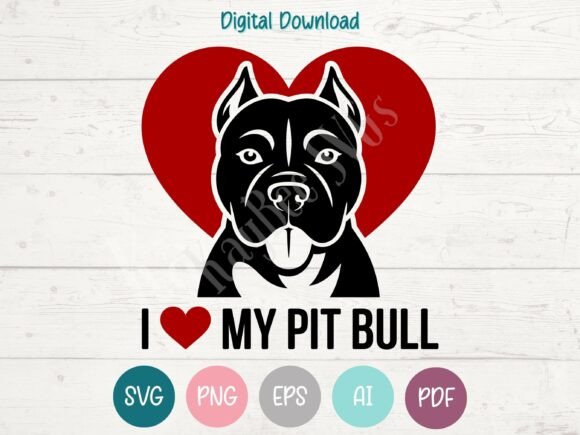
What strikes me first is the confident linework and the balanced use of negative space. The design avoids clutter, which is crucial when you’re layering it over photography, using it as a website header, or shrinking it for a Pinterest pin. The pit bull silhouette and the accompanying typography convey a warm, proud sentiment — perfect for content that wants to connect emotionally with readers. It doesn’t feel like a generic clip-art piece; it carries a distinct personality that can elevate a blog’s visual hierarchy immediately.
From a publisher’s perspective, the mood is decidedly lifestyle-focused and heart-forward. I wouldn’t call it playful in a childish way, nor overly decorative. It sits in that sweet spot of artistic and approachable, making it suitable for modern pet blogs, rescue organization content, dog training guides, family lifestyle sites, and even mental health resources where emotional support animals are featured. While the love-for-pit-bulls message is specific, the aesthetic is broad enough to complement a wide range of editorial directions.
How This Asset Fits Into a Real Publisher’s Workflow
Let me walk you through a typical week in my publishing process. I’m creating a lead magnet, designing several article header variations, planning a newsletter, and scheduling Pinterest graphics. Right away, I can see this file working as:
- A featured image overlay for a blog post about responsible pit bull ownership
- A bold Pinterest pin with the design placed prominently against a soft background
- A central graphic for a digital guide or printable checklist on dog care
- A newsletter header that instantly adds warmth to an email sequence
- A category thumbnail on a pet blog to signal a “pit bull lifestyle” section
- An affiliate content visual for reviewing dog products, building reader trust with a cohesive look
Because the download includes SVG, PNG, EPS, AI, and PDF formats, it drops seamlessly into Canva, Adobe Illustrator, Photoshop, or even simple online editing tools. For a website owner who needs to maintain a consistent visual identity across many platforms, this kind of versatility reduces design friction significantly.
Building Reader Trust Through Strong Visual Communication
When a blog image looks amateurish, the content immediately loses credibility. I’ve seen well-researched articles get ignored simply because the graphic was poorly scaled or generic. The I Love My Pit Bull SVG PNG EPS AI PDF avoids that trap by offering clean, scalable vectors and high-resolution rasters. As a result, the visual communication is crisp on retina screens and doesn’t pixelate when resized for different layouts.
Reader trust isn’t just about content accuracy; it’s about the feeling of professionalism that greets someone the moment a page loads. This design asset, when placed in a hero image or above the fold, signals that the publisher cares about the details. That emotional cue — a sense of polish and intentionality — can quietly boost time-on-page and make a visitor more likely to subscribe or click through to an affiliate offer.
Where the Design Truly Shines in Publishing
After testing it in several mockups, I’m confident that this graphic thrives in scenarios where you need an immediate emotional connection. Think hero images for adoption success stories, article thumbnails that need to stand out in a crowded RSS feed, and social media previews where you have just a second to capture attention. The strong silhouette holds its own even when scaled down, which is a must for mobile-first websites.
I also see it working brilliantly as a downloadable resource cover. For example, a blogger offering a “Pit Bull Care Starter Kit” as a lead magnet could set this artwork prominently on the PDF cover, immediately uniting the visual with the brand message. Similarly, in T-Shirt Designs, the graphic’s structure translates effortlessly — the SVG and AI files ensure that print-ready quality remains intact for merchandise, fundraising campaigns, or small business branding.
If you’re building Canva templates for a creative marketplace, this design becomes a core element around which entire template sets can be built. The clean lines and modern lettering let you pair it with a variety of fonts without losing its identity, making it a repeatable asset in your digital product library.
When to Use It With a Lighter Touch
Not every publishing space will welcome the design’s bold personality. On ultra-minimalist sites or in highly corporate content — think financial advisory newsletters or medical journals — it might feel out of step with the surrounding aesthetic. Similarly, if your blog layout already relies on busy patterns or multiple competing visual elements, the impact of this graphic could be diluted. I’d recommend using it on clean backgrounds and giving it breathing room.
Small mobile thumbnails deserve special attention. While the design holds up well, always test it at 150×150 pixels or less, especially if it appears alongside text in a category grid. The emotional clarity is still there, but you want to confirm that the wording remains readable at tiny sizes. For text-heavy blog images, I’d favor placing the graphic on its own layer with reduced opacity behind the headline, rather than competing directly with it.
Practical Publishing Notes From My Own Tests
Whenever I onboard a new graphic design asset, I run through a checklist. Here’s what I learned with this one:
- Desktop vs. mobile: On desktop, the vector crispness is flawless. On mobile, the main visual still reads clearly in a featured image container, but pairing it with a serif font for the headline created a lovely contrast that improved readability.
- Thumbnail preview: Inside a blog grid layout, this graphic acted as a strong visual anchor. It pulled the eye without overwhelming adjacent post thumbnails, a balance that’s often hard to strike.
- Contrast and color: The black-and-white default is flexible, but I also tested it in inverted white-on-dark for a moody editorial look. It worked beautifully, suggesting the asset’s adaptability beyond its native color scheme.
- Font pairings: I placed it beside a serif (Playfair Display), a sans serif (Inter), a script (Allura), a handwritten font (Caveat), and a display typeface. In every case, the design maintained its integrity. The sans serif combination felt especially modern for web use, while the serif brought an editorial, magazine-like quality.
- File performance: The PNG is reasonably sized for web; I still ran it through image compression to shave off kilobytes without visible quality loss — important for page speed. The SVG is ideal for web use, keeping the visual razor-sharp without bloating load times.
- Licensing: Before placing it on monetized websites, affiliate pages, or paid content products, always confirm the commercial license terms. Many designers, including this one from KayBee SVGs, craft files with clear usage guidelines, but it’s a publisher’s responsibility to ensure compliance for commercial design work.
Editorial Pairings and Visual Identity Building
One of the reasons I keep returning to designs like this is their ability to become a recognizable part of a blog’s visual identity. When you use the same graphic consistently across category pages, podcast artwork, and email banners, readers start to associate that design with your content. This kind of repetition, done thoughtfully, strengthens brand identity and makes your content instantly identifiable in a busy social feed.
For small business owners and creative entrepreneurs, an asset like the I Love My Pit Bull SVG PNG EPS AI PDF can also anchor a seasonal campaign — perhaps a “Pit Bull Awareness Month” series — without requiring a full rebrand. You pull the graphic to the forefront, tint it with the campaign’s accent color, and immediately the whole site feels coordinated. That’s the power of a versatile graphic design asset.
Real-World Publishing Ideas You Can Steal
If you’re not sure where to start, here are a few concrete directions that have worked for me and might spark something for your own content marketing:
- Round-up post: Feature the graphic in the hero image for an article like “10 Must-Have Items for Pit Bull Parents” — it frames the whole piece with emotional warmth.
- Pinterest strategy: Create multiple pin variations using the design as a constant element, changing only background colors and headline fonts. This builds a recognizable pin brand.
- Content upgrade: Embed the graphic into a checklist or printable wall art, then offer it as a free digital download to grow your email list.
- Affiliate disclaimer page: Yes, even a disclosure page can feel on-brand when a small version of the graphic sits in the sidebar, tying the legal page visually to the rest of the site.
- Newsletter series: Use a softened version of the design in the header of every email in a welcome sequence, creating a cohesive thread that feels steady and reassuring.
Throughout all of this, remember that the file you’re working with — originally described as a way to unleash your creativity with a great design from KayBee SVGs, made for craft enthusiasts and DIY aficionados — is robust enough for serious digital publishing. The fact that each art file is crafted to elevate projects across various platforms, including Cricut, only adds to its utility. You can confidently move it from a vinyl cut on a T-shirt to a high-resolution editorial graphic without missing a beat.
Supporting Better Content Performance One Graphic at a Time
A blog’s performance isn’t just about SEO keywords. It’s about the split-second decisions a reader makes based on what they see. A strong first impression, clearer visual hierarchy, and consistent branding all contribute to higher click-through rates and lower bounce rates. When the right design assets are in place, readers subconsciously trust the content more. They linger longer, share more often, and are more likely to explore a call to action.
The I Love My Pit Bull SVG PNG EPS AI PDF fits neatly into this performance puzzle. It solves a recurring problem: how do you quickly create visuals that look custom-made, emotionally resonant, and professionally polished, without spending hours in illustration software? For affiliate marketers, bloggers, and online educators, this means more time creating valuable content and less time wrestling with design tools.
Final Thoughts for the Publisher’s Toolkit
I’ve reviewed hundreds of graphic assets over the years, and the ones that stay in my rotation always share a few traits: they are well-structured, adaptable, and bring an authentic emotional tone to the projects I build. This one checks every box. Whether you’re assembling a media kit, refreshing your blog’s visual layout, or designing a digital guide that needs to feel welcoming, this download earns its place. Just remember to test it in your specific publishing environment — preview it within your actual theme, experiment with thumbnail rendering, and ensure it plays nicely with your chosen font palette. When those small adjustments are made, the result is a cohesive, trustworthy, and genuinely attractive publication that stands out online.
For anyone running a content-driven website, creative blog, or small business, this graphic offers a smart shortcut to stronger visual storytelling. It’s a pleasure to work with, and it reminds me why investing in high-quality, versatile graphic design assets remains one of the simplest ways to elevate a brand’s digital presence.